
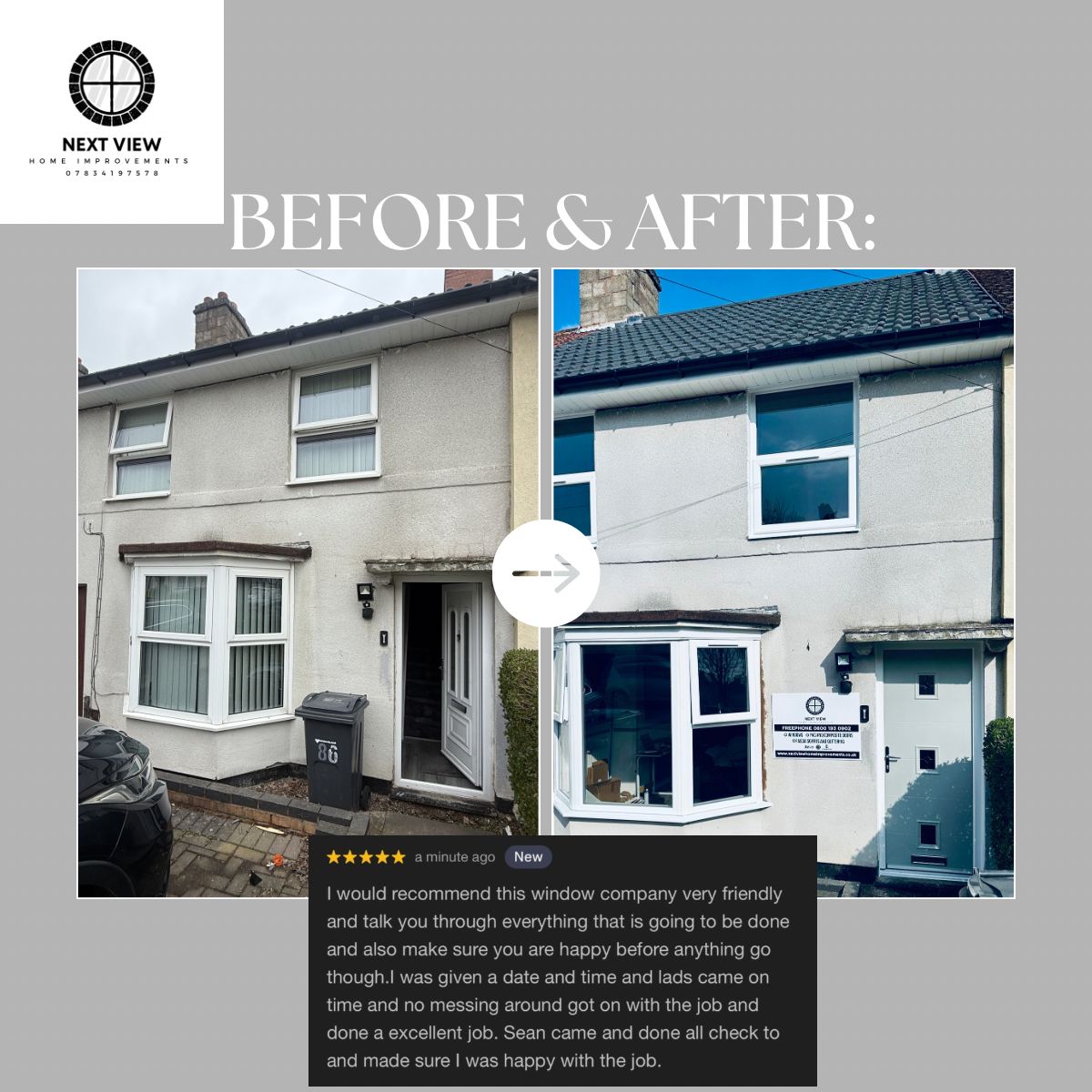
Why New Windows? Signs You Need Replacement Windows in Wolverhampton & the West Midlands
Most homeowners do not replace windows because they want to — they replace them because the heating never quite keeps up, the glass has misted, or a handle has finally given up. This guide sets out the signs worth acting on, what modern glazing actually changes, and what a full house realistically costs in 2026.
Six signs it is time to replace your windows
Windows rarely fail overnight. They decline gradually, and it is easy to normalise a cold bay or a bedroom that streams with condensation every winter. If two or more of the following sound familiar, replacement is usually the more economical route.
Condensation inside the sealed unit
Misting between the panes means the seal has failed and the insulating gas has escaped. No amount of wiping fixes it — the unit is no longer doing the job you paid for. On older frames it is usually the cue to replace the whole window rather than the glass alone.
Draughts and rattling frames
Perished gaskets, tired hinges and shrunken timber let cold air track around the opening. If you can feel movement with the window closed, your heating is warming the street as much as the room.
Rooms that never feel warm
Early double glazing from the 1990s often uses a 4-6-4 unit with no low-emissivity coating and an aluminium spacer bar. Modern A-rated units with warm-edge spacers and argon fill retain dramatically more heat for the same wall opening.
Traffic and neighbour noise
Homes on busy routes through Wolverhampton, Bilston and Dudley benefit from acoustic laminated glass or asymmetric unit build-ups, which cut road noise noticeably without changing the look of the window.
Old or damaged locking
Pre-2010 windows frequently lack multi-point shootbolt locking and modern hinge protection. New units are fitted with high-security locking and toughened or laminated glass where required, which insurers increasingly expect.
Repeated repair bills
Once you are replacing handles, hinges and blown units every year, the repair spend on a full house of windows quickly overtakes the cost of replacing them properly once.
What new windows actually save you
Around a fifth of the heat a typical home loses goes through its glazing. Replacing tired 1990s units with modern A-rated or A+ windows changes three things at once: the glass itself carries a low-emissivity coating that reflects warmth back inside, the cavity is filled with argon rather than air, and the spacer bar around the edge is a warm-edge polymer instead of conductive aluminium. The result is a lower U-value, warmer glass surfaces, and far less of the edge condensation that leads to damp sills and mould on reveals.
In real terms, homeowners moving from single glazing or failed early double glazing commonly report a meaningful drop in annual heating spend, and — just as importantly — rooms that hold their temperature after the heating goes off. Bedrooms above bay windows and rear extensions with large openings usually show the biggest difference.
Comfort, condensation and damp
Cold glass is a magnet for moisture. Once the pane surface is warmer, water vapour from cooking, showering and drying clothes stays airborne and can be vented rather than condensing on the frame. Modern windows are fitted with trickle ventilation where Building Regulations require it, which keeps the background air change rate correct without leaving you with a draught you can feel.
Security and insurance
New frames bring multi-point locking, internally beaded glazing so units cannot be removed from outside, and hinge protection as standard. Toughened or laminated safety glass is used in critical locations — low-level panes, doors and side panels — which is both a regulatory requirement and a practical benefit for families.
Local property types we work on
- Victorian and Edwardian terraces (Bilston, Dudley, inner Wolverhampton) — narrow sightlines and sliding sash or flush casement styles keep the original character while gaining modern performance.
- 1930s semis with bay windows (Penn, Finchfield, Sedgley) — structural bay poles and correctly detailed roofs matter as much as the glass itself.
- Post-war and 1970s estates (Wednesfield, Willenhall, Walsall) — large openings where A-rated units make the sharpest difference to comfort.
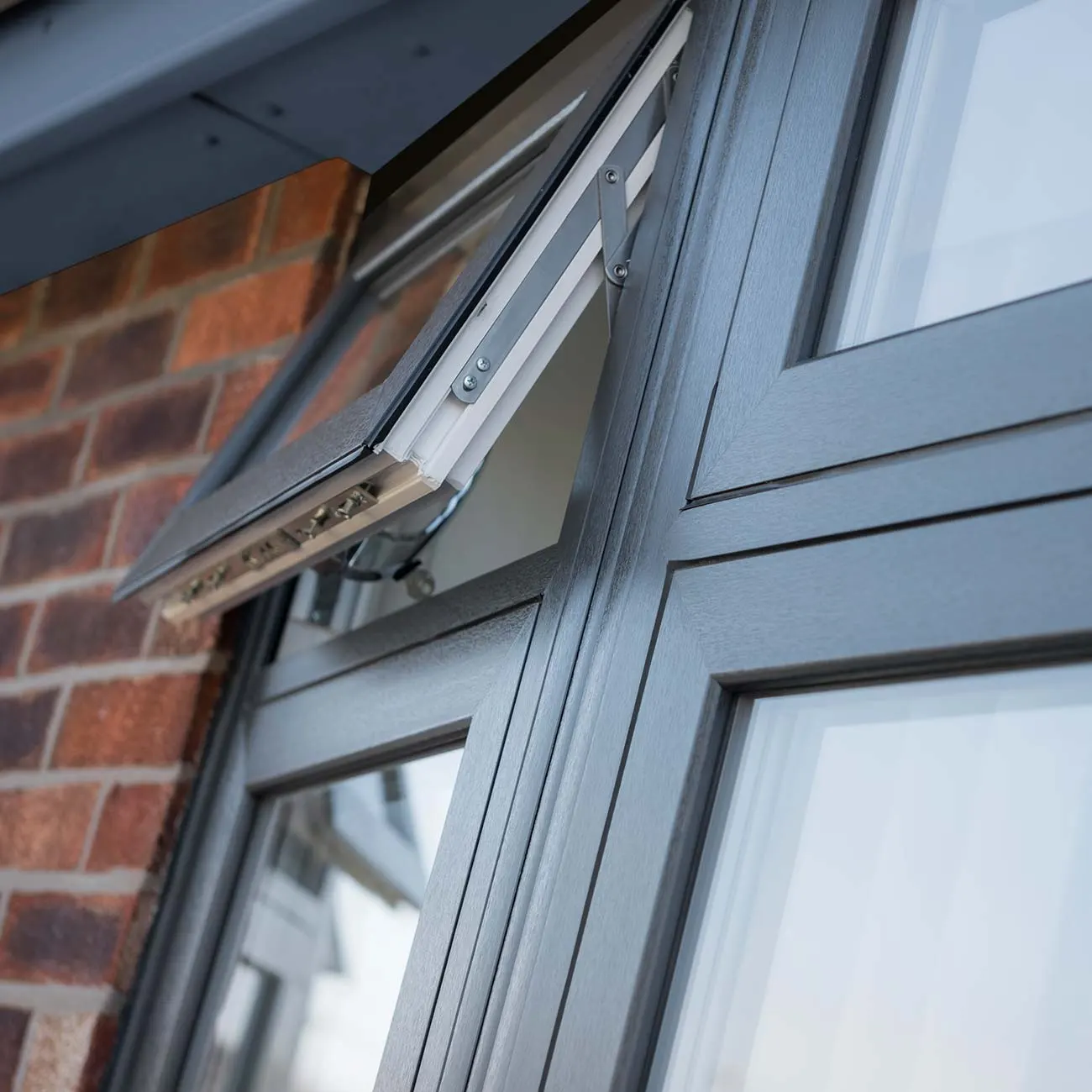
- New-build and extensions (Cannock, Stafford, Birmingham) — anthracite grey and woodgrain foils matched to existing doors and roofline.
What do replacement windows cost in 2026?
Honest guide pricing, before survey: a single A-rated white uPVC casement usually lands between £450 and £750 supplied and fitted. A three-bedroom terrace or semi with a full set of windows commonly falls between £3,500 and £6,500. Bay windows, coloured or woodgrain foils, acoustic laminated glass, leaded or Georgian detailing, and awkward access all push the figure up.
The only number that matters is the one on your written quotation, which is why we survey first, price once, and put it in writing. There is no discount countdown, no "today only" pricing and no commission salesperson in your living room — a director or surveyor measures, explains the options and leaves you with a fixed price. Flexible finance is available on qualifying orders if you would rather spread the cost.
Repair or replace?
If your frames are straight, the hardware operates cleanly and only one or two units have misted, glass replacement or window and door repairs is the sensible, cheaper answer and we are happy to say so. Where frames have distorted, discoloured or rely on obsolete hardware, full uPVC window installation delivers a far better result for a long time.
What happens on installation day
Fitting a full house typically takes one to two days. Floors and furnishings are protected, old frames are removed carefully rather than smashed out, new units are packed and fixed level, and every opening is sealed inside and out. All waste, including the old glass, leaves with us the same day. Once complete, your work is registered under our Assure certification and backed by our IWA insurance-backed guarantee and deposit protection.
Serving Wolverhampton, Bilston, Dudley, Walsall and Birmingham — see all areas we cover.
Replacement window questions we are asked most
How do I know if I need new windows?
The clearest signs are condensation or misting inside the sealed unit, draughts you can feel with the window closed, frames that no longer close cleanly, rising heating bills, noticeable road noise and locking that is worn or outdated. Any two of these together usually mean replacement is more economical than repair.
How long do double glazed windows last?
A well-made uPVC window typically lasts 20 to 25 years, with the sealed units themselves often failing first at around 15 to 20 years. Windows installed in the 1990s in the West Midlands are generally at or beyond the end of their useful life.
How much do new windows cost in Wolverhampton?
As a guide, a single A-rated uPVC casement window typically falls between £450 and £750 supplied and fitted depending on size, glazing and colour, while a full terraced or semi-detached house is commonly £3,500 to £6,500. Bay windows, woodgrain foils and acoustic or obscure glass add to that. We give a fixed written price after survey with no pressure selling.
Do replacement windows need Building Regulations approval?
Yes. Replacement windows must meet thermal, ventilation and safety-glazing requirements. As an Assure-certified installer we self-certify the work and register it, so you receive a compliance certificate for your records and any future sale of the property.
Can I replace just the glass instead of the whole window?
If the frames are sound and the hardware works, replacing a blown sealed unit is often the sensible option and we offer that as a standalone service. Where frames are distorted, discoloured or fitted with old-generation hardware, replacing the full window gives a far better thermal and security result.
Ready to Transform
Your Home?
Whether you need new windows, composite doors, or glass replacement — get your free, no-obligation estimate today. Most quotes delivered within 48 hours.